
Electroencephalography (EEG) Test in Tamarac, FL
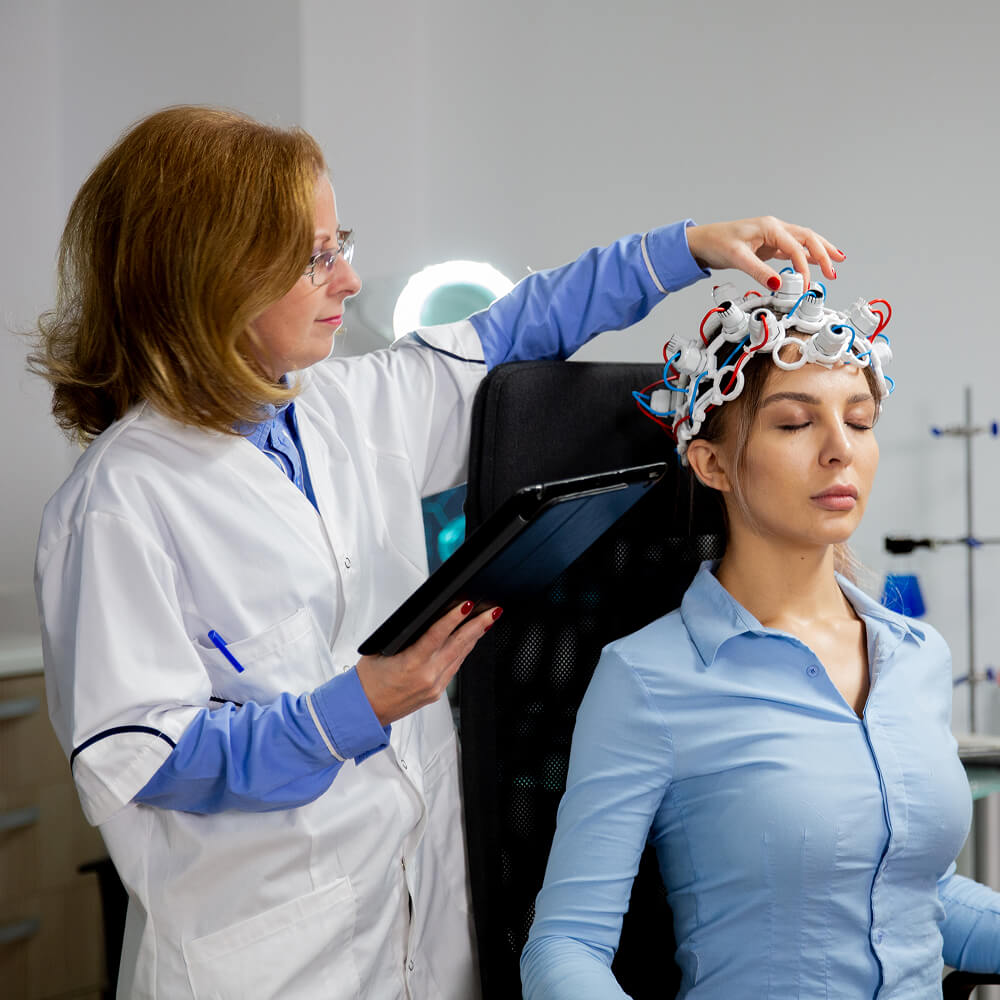
Advanced Neurological Evaluation With EEG Testing
An electroencephalogram (EEG) is a noninvasive test that records the brain’s electrical activity. This can help assess symptoms of seizures, episodes of altered awareness, and some sleep problems.
EEG testing at Ismail MD provides neurological information that can be taken into consideration with your symptoms, medical history, and other clinical findings to help guide your care.
Test Overview
EEG test measures electrical signals from your brain activity by putting small electrodes on your scalp. The electrodes transmit those signals to a recording system where they are displayed as wave patterns to be interpreted by a healthcare professional.
An EEG does not send electricity into your brain, and it is usually painless. Depending on the reason for your test, you may have a routine EEG, sleep EEG, ambulatory EEG, or longer-term monitoring. Your provider will decide which type is best for your symptoms.


Clinical Uses
EEG test is used to evaluate seizures and epilepsy. It may give information about abnormal electrical activity that may help in diagnosis or in characterizing seizure activity.
Your provider may also recommend an EEG if they are evaluating:
- Episodes of confusion or altered awareness without a known cause
- Some kind of unusual movement or behavior
- Concerns about sleep
- Alterations in brain function following some injuries or illnesses
- Encephalopathy and other disorders of brain function
- Abnormal brain activity in the critically ill
EEG is only part of a neuro workup. Your provider may interpret its findings with your symptoms, medical history, neurological examination, and other tests.
Risks and Limitations
EEG is a safe, noninvasive test. It usually doesn’t hurt, but some people experience momentary scalp irritation or discomfort from the electrodes or adhesive.
Some EEGs are performed with controlled procedures such as deep breathing or flashing lights to help bring out abnormal brain activity. These activities can sometimes cause a seizure in people who are prone to them. The testing team will watch you during the procedure.
It has its limitations too. However, a normal EEG does not automatically rule out epilepsy or prove that a seizure did not happen. The results of an EEG have to be interpreted with your symptoms and other clinical information in mind.


Test Preparation
Most routine EEGs need only minimal preparation. Follow the instructions of your healthcare team. You may be requested to:
- Shampoo your hair before testing and do not use oils, sprays, gels, or other styling products
- Tell your provider about any medications or supplements you are taking.
- Follow special sleep instructions if a sleep-deprived EEG is scheduled
- Follow any instructions relating to food, drinks, or caffeine.
- Don’t stop or change your medications without talking to your healthcare provider first.
Testing Process
Before the test, a technician will attach electrodes to specific locations on your scalp. The electrodes are connected to a recording system that captures the electrical activity of your brain.
You may be asked to open or close your eyes, relax, take a few deep breaths, or look at a flashing light during the recording. Depending on the type of EEG, you may also be asked to sleep.
A routine EEG generally takes about 20 to 30 minutes, although longer monitoring may be required depending on the test and reason for evaluation.
The procedure itself is usually painless, and the electrodes simply record brain activity.


Aftercare Guidelines
Following a routine EEG, the electrodes are taken off, and your scalp may be cleaned. Most people can return to normal activities afterward.
The electrode paste or adhesive may make your hair feel sticky. You can wash the residue out of your hair.
If you were sleep-deprived during your test, you might feel tired afterward. Follow your provider’s directions on driving and other things that need alertness.
Results and Next Steps
A qualified health professional reviews the EEG recording and interprets it. The results can be described as normal or abnormal, but an abnormal EEG does not automatically establish a diagnosis.
Your provider will consider the findings along with your symptoms, medical history, neurological exam, and other diagnostic information. Depending on the results, you might require further testing, imaging, monitoring, or follow-up with a neurologist.
Your provider can explain what the results mean for you and whether further evaluation or treatment is necessary.

Why Choose Ismail MD

Comprehensive Neurological Evaluation

Personalized Treatment and Follow-Up
Care is tailored to your symptoms, diagnosis, medical history, and treatment needs, with follow-up to monitor changes and adjust care when needed.

Mental
Health Care
Neurology and psychiatry services in one practice for conditions that may involve both neurological and mental health needs.







Frequently Asked Questions About EEG
What does an EEG test show?
An EEG is a measurement of the electrical activity of the brain as wave patterns. It can help to identify certain abnormalities in brain activity, particularly those related to seizures and epilepsy.
Is an EEG painful?
No. An EEG is generally painless. The electrodes rest on your scalp and record electrical activity without sending electricity into your brain.
How long does an EEG take?
A routine EEG usually takes 20 to 30 minutes. Some types of EEG monitoring can run for several hours or longer, depending on the purpose of testing.
Can an EEG diagnose epilepsy?
EEG can be a useful tool in the evaluation of epilepsy but should not be interpreted in isolation. Your provider will use the EEG findings along with your symptoms, medical history, and other clinical information. Normal EEG does not exclude epilepsy completely.
Can I take my medications before an EEG?
Unless your healthcare provider tells you otherwise, keep taking your medications as you normally do. Do not change or stop medication yourself before your EEG.
Can I eat before an EEG?
Preparation needs can depend on the type of EEG. Follow any special instructions from your health care team about food, drinks, and caffeine.
What happens if my EEG is abnormal?
An abnormal EEG does not automatically identify the cause of your symptoms or make a diagnosis. Your provider will interpret the results according to your overall clinical picture and determine if further evaluation is necessary.
Take the Next Step Toward Support
If substance use is affecting your health, relationships, work, or daily life, you do not have to figure out the next step on your own. At Ismail MD, our psychiatric team provides confidential, individualized evaluation and treatment based on your symptoms, medical history, and needs.